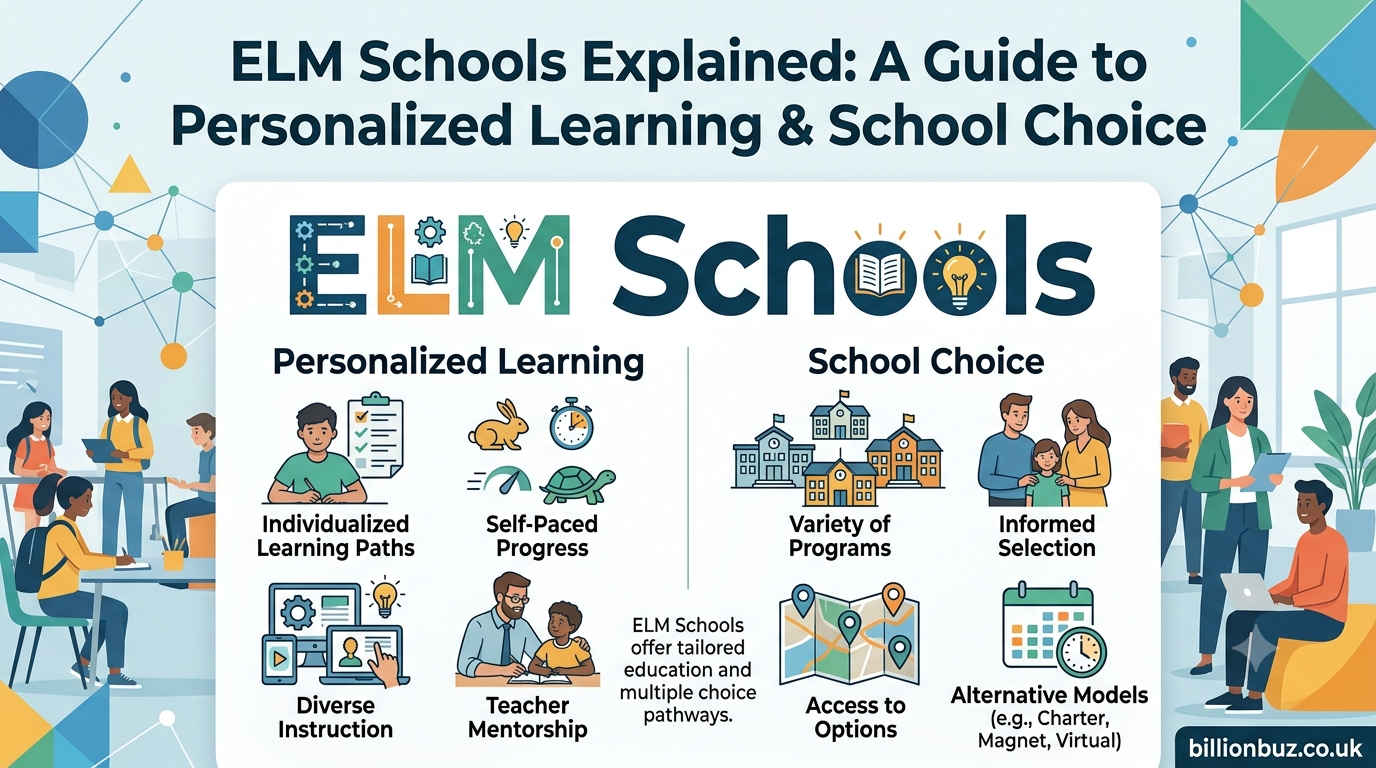
ELM Schools
Finding the right place for your child to learn can feel overwhelming. Many parents today are searching for “elm schools” or similar flexible learning environments to help their kids thrive. Education is changing fast, and families want options that go beyond the traditional classroom. Whether you are exploring local charter options or virtual learning paths, understanding these models is the first step toward finding a perfect match.
Every student learns in their own unique way. Some kids love the energy of a busy group, while others do better with quiet, focused time. Personalized learning is the heart of many modern programs. These models often focus on the specific needs of the student rather than a “one-size-fits-all” approach. When we look at various educational choices, the goal is always the same: helping every child reach their full potential.
What Are ELM Schools and Why Do They Matter?
When families search for “elm schools,” they are often looking for environments that foster growth, leadership, and mentorship. These schools often emphasize the importance of building strong relationships between teachers and students. This connection helps create a safe space where children feel comfortable taking risks and trying new things.
In these settings, educators act more like guides or mentors. They spend time getting to know each student personally. This is crucial because when a student feels “seen” and valued, their confidence grows. A strong community is the foundation of success in any educational journey. By focusing on social-emotional growth alongside academic skills, these programs help students build resilience for the future.
The Role of Personalized Learning in Modern Education
Personalized learning is not just a buzzword; it is a way to teach that puts the student in the driver’s seat. In programs modeled after flexible learning frameworks, students can often move at their own pace. If a child masters a math concept quickly, they can move on without waiting for others. If they need more time, they get the extra support they need.
This flexibility is a huge benefit for families. It means school can fit into a child’s life, rather than the other way around. By using technology to deliver high-quality materials, teachers can focus on providing the specific help each student needs. This creates a much more engaging experience for the learner.
Exploring Online Charter School Programs
Many parents who look for “elm schools” or unique educational experiences eventually discover the world of online charter schools. These are tuition-free public schools that offer a different way to attend class. Because they are public, they are open to all students, much like a regular school. However, they operate with more freedom to innovate.
These schools often combine home-based learning with teacher-led instruction. This hybrid model allows parents to be more involved in the daily routine. For many families, this is the perfect balance between the structure of a professional school system and the comfort of the home environment. It is a popular choice for students who need more flexibility than a traditional school provides.
Building Strong Connections Between Home and School
One of the biggest advantages of modern learning models is the focus on community. Whether you choose an “elm schools” style approach or a virtual academy, the partnership between home and school is vital. When parents and teachers communicate openly, the student benefits the most.
Teachers who prioritize these connections often see higher academic achievement. They know that a child’s home life and school life are linked. By creating a collaborative environment, everyone works together to support the child’s goals. This team-based approach helps students feel secure, motivated, and excited about their daily learning tasks.
Innovation in Teaching and Technology
The use of modern technology has changed how we think about the classroom. Today, students can interact with teachers and peers from all over the country. This opens up doors to classes and subjects that might not be available in a small, local school.
Interactive tools and digital resources make learning fun and accessible. Even for young students, being able to engage with digital content can spark a love for discovery. Innovation is at the core of why so many families are looking for new educational paths. They want their children to be prepared for a future that will rely heavily on digital skills and creative problem-solving.
Why School Choice Matters for Families
Every family has a unique situation. Some need the flexibility of remote learning, while others need the community of a physical campus. School choice is about empowering parents to find what works best for their specific child. When families have options, they can find a school that aligns with their values and their child’s needs.
The search for “elm schools” represents a broader trend of parents taking an active role in education. They are looking for quality, flexibility, and a focus on the “whole child.” By exploring these options, you are investing in your child’s future. It is a powerful way to ensure that your child is placed in an environment where they feel happy and challenged.
The Importance of Social-Emotional Learning
We now know that academic success is linked to emotional well-being. Modern schools often teach social-emotional skills as part of the core curriculum. This includes learning how to manage feelings, get along with others, and set goals.
When schools emphasize these skills, they help children navigate the ups and downs of life. A child who can handle stress and work well in a team will go far. These lessons are just as important as reading or math. Many of the most successful school models today make sure that these “soft skills” are woven into every part of the day.
How to Find the Right School Fit for Your Child
Searching for a school can be a big project. Start by listing what is most important to your family. Is it a small class size? Is it a specific focus on arts or science? Or perhaps you need a schedule that is very flexible?
Once you know your priorities, you can begin researching local charter schools or online programs in your state. Look at their websites, read their mission statements, and reach out to talk with an enrollment representative. Ask questions about how they support students and what the day-to-day experience is like. This research will help you feel confident in your decision.
Success Stories and Real-World Examples
Many families have found incredible success after moving to alternative school models. For example, some students who struggled in a traditional classroom found they thrived in a program that allowed for self-paced learning. Others loved being able to pursue passions like music or sports while still getting a top-tier education.
These stories highlight the value of looking beyond the traditional path. When a child finds the right environment, the change is often amazing. They become more confident, more engaged, and more excited to learn. These examples serve as a reminder that there is no one “right” way to get a great education.
Future Trends in Education
Education will continue to evolve as we move forward. We will likely see even more focus on personalized learning and the use of smart technology. Schools that can adapt to the needs of students will continue to be the most popular choices.
For parents, this means staying informed and staying flexible. As new options emerge, keep an open mind. The best educational choice for your child might change over time, and that is okay. The goal is to keep supporting their growth and love for learning every step of the way.
Understanding the “Connections” and “Biography” of Education
In the world of educational leadership, many experts like those featured in Forbes often discuss the changing landscape of schooling. They emphasize how leadership, innovation, and community support drive school success. While there isn’t one specific “ELM school” in the national limelight, the term often represents a movement toward Engagement, Learning, and Mentorship.
| Feature | Traditional School | Modern/Flexible Model |
| Pace | Fixed/Uniform | Personalized/Flexible |
| Teacher Role | Instructor | Mentor/Guide |
| Setting | Physical Classroom | Blended/Online/Flexible |
| Focus | Standardized Testing | Holistic Growth |
Frequently Asked Questions (FAQs)
1. What does the term “elm schools” mean for my child?
While “elm” can refer to many things, in education, it often represents a focus on Engagement, Learning, and Mentorship, emphasizing a student-centered approach.
2. How are charter schools different from regular public schools?
Charter schools are publicly funded but have more autonomy in how they run their programs. They are often held to strict performance standards in exchange for this freedom.
3. Is online learning right for every student?
Online learning is a great option for many, especially those who need flexibility. However, it works best for students who are motivated and have support at home.
4. How do I know if a school is a good fit?
Look at the school’s mission, talk to other parents, and consider your child’s personality and learning style. A good fit will support both academic and emotional growth.
5. Can my child still socialize in an alternative school model?
Yes! Most modern school programs have clubs, group projects, and community events to ensure students have plenty of opportunities to make friends and work together.
6. How can I start the enrollment process?
Most charter and specialized schools have their own websites where you can find application forms and schedules for information sessions.
Conclusion
Choosing an educational path is one of the most important decisions a parent makes. Whether you are interested in programs that reflect the “elm schools” philosophy of mentorship or are exploring the flexibility of online charter programs, the focus should always be on what makes your child feel excited and capable. Education is a journey, and with so many modern, innovative options available, you have the power to create a supportive and successful experience for your child. Take the time to explore, ask questions, and trust your instincts. Your child’s bright future starts with the choices you make today.
About the Author